
TOLAI CURRENCY RING
TOLAI CURRENCY RING
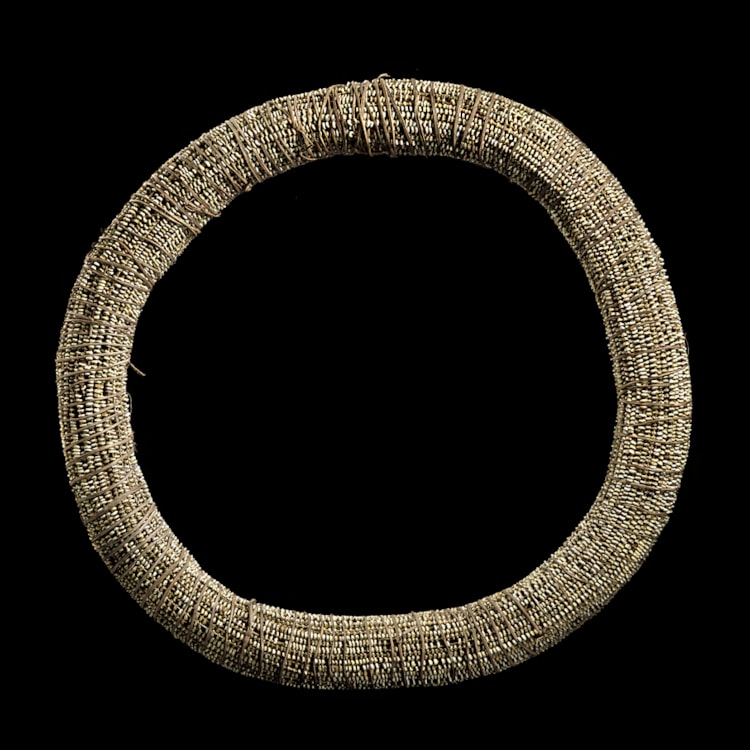
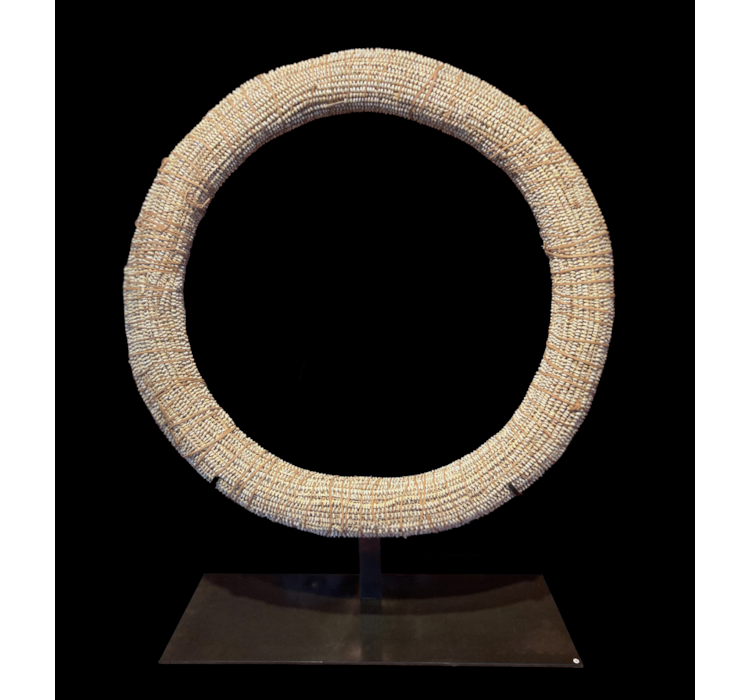
A very large and complete money role or Tutana-ot, also known as diwarra and/or tabu. Currency roles of this size are made up of approximately ten thousand minute and calibrated nassa shells (Nassariidae) that are pierced and strung on lengths of vine. The shells are known as palakanoara in the local language. This is the most important type of currency in the Tolai culture and contrary to other ceremonial types of money the diwarra can be broken up into small sections and used as an everyday method of payment.
Tolai, New Britain, PNG, Melanesia. Nassa shells fiber. 80 Ø cm. 19th/20th century.
Literature:
"…The standard unit of tabu currency is one param—a string roughly the length of an adult’s arm span, bearing approximately 300 shells. Tabu derives its economic value from the effort that goes into producing it and acquires its cultural value as it changes hands over the course of many rituals and ceremonies.
… new shell money is regarded with suspicion—to make it sacred and drive away any bad magic associated with dead shells, the owner must perform a ritual. The Tolai generally reserve newly fabricated money for ceremonies or traditional payment of large fines. It must feature in at least one mortuary ritual before it can be used as ordinary currency for everyday domestic products." (Martin Maden in The Spiritual Shell Money of Papua New Guinea, Claudio Sieber & Shanna Baker in https://hakaimagazine.com/videos-visuals/cash-with-spiritual-currency/)
Ref. : Lautz, T.: FEDERGELD UND MUSCHELKETTEN. Geldgeschichlichen Museum der Kreissparkasse, Köln. 1992.