
Archaic Maori Patu Pounamu
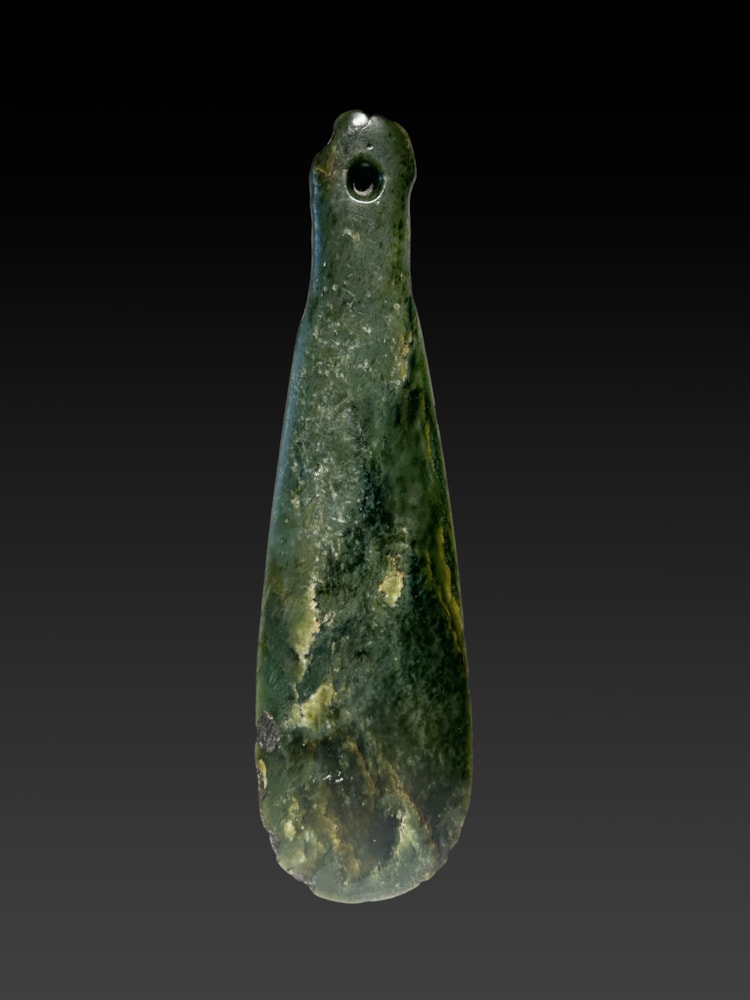
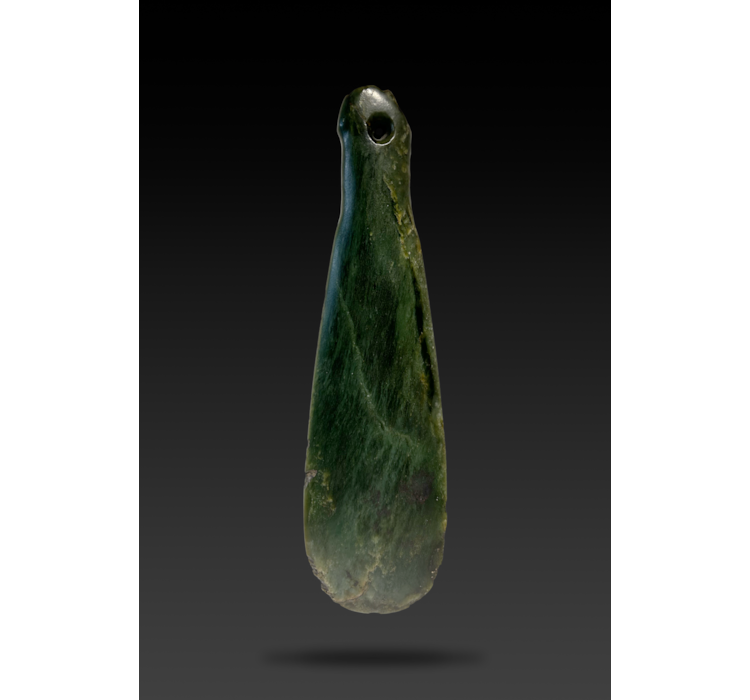
Archaic Maori Patu Pounamu
A very fine and early Patu Pounamu of archaic form. The one-piece weapon, spatulated in shape, is carved from a large block of nephrite of high quality. The handle, with a widened but, pierced for the wrist strap, is carved with subtle "shoulders" widening towards the sharp spatulate blade. The shoulders can permit a localization of manufacture along the northern edge of the South Island of New Zealand on the southern fringe of the Cook Strait.
The weapon of the great chiefs and hierarchical nobility, the nephrite Patu (Patu pounamu), was reserved for the exclusive use of those of the highest rank. The patu pounamu is not only a weapon - it is also the very representation of the chief’s power; his lineage and these objects are among the most important treasures of the Maori chiefs. It is an object of prestige, a heritage item given with great ceremony to the descendants or to the future chief. They are the object of permanent covetousness. Some patu of historical fame are so important that being executed with a named weapon confers a significant "mana" (aura – power) to the victim.
Maori, New Zealand, Polynesia
Green nephrite with yellow veining with a fine well-worn ancient patina and a few old battle chips.
H: 29.5 cm W: 8.5 cm
Pre-Contact, 18th century or earlier – Te puawaitanga period : The Classical Maori period dated from the sixteenth to the nineteenth century. This period, known as Te puawaitanga, or ‘the flowering’, is regarded as the time when the most beautiful Maori art was created.
Provenance
Provenance:
Private collection, Great Britain.
Collection David Petty, Great Britain.
Patrick Mestdagh, Bruxelles, acquired from David Petty in 2008,
Collection Guy Porré & Nathalie Chaboche, Bruxelles, acquired from Mestdagh in 2013.
Literature:
The pounamu or nephrite used to make a patu was carefully chosen to be flawless and to have a good color. A block of greenstone (also called jade) was first rough-cut and blocked out using pieces of quartzite combined with sand and water. Dressing and finishing of the surface was done by the specialist maker with fine sandstone and pieces of very hard, smooth stone. Due to the toughness of greenstone, patu pounamu were able to be made thinner than other similar patu made from basalt or whale bone, however this made the process of manufacture slower and arduous. The creation and finishing of a mere pounamu is claimed to have sometimes taken more than a full generation to complete.
Pounamu was and is still highly prized by Māori and the patu pounamu as the weapon of a chief or rangatira, was the most revered of all Māori weapons. These patu were passed down through generations; they were given individual names and were said to possess a spiritual quality or mana of their own. Particularly special patu were imbued with magical powers, or supernatural qualities. Due to the high value placed on revered patu pounamu they would often be hidden when not in use and kept in specially constructed cases. Considerable efforts were undertaken, often by an entire tribe, to recover or regain significant patu that were lost or stolen. Patu were buried with their chiefly owners but were considered so valuable that they were later recovered from the grave during the second burial. It was considered an honor to be killed by an especially significant or specific patu pounamu. Captives would sometimes volunteer their own patu pounamu as their means of execution rather than be killed by a lesser weapon.
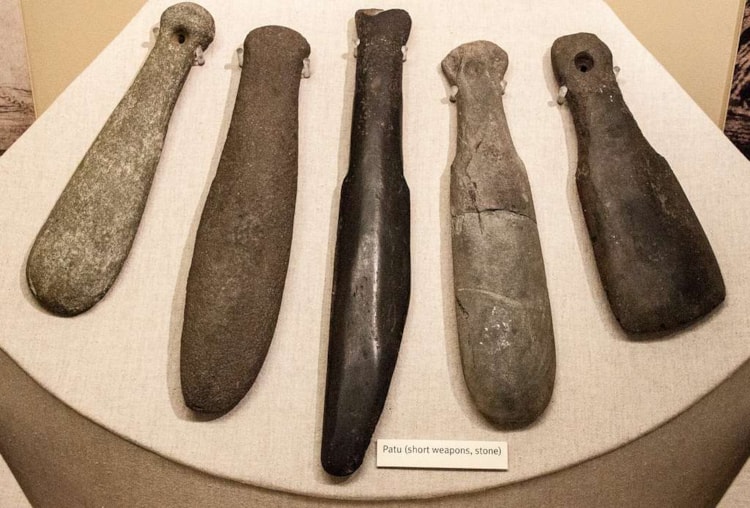
See here the photo from the Canterbury Museum in Christchurch New Zealand showing archaic Patu with marked shoulders and squared and pierced reke (the ribbed pommel).