
Fiji I ULA DRISA from the Burns Family Massacre
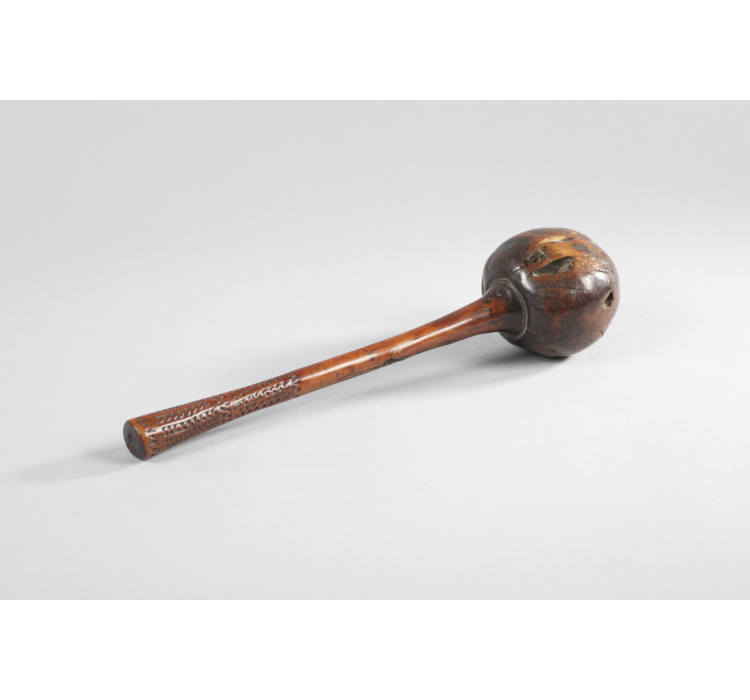
Fiji I ULA DRISA from the Burns Family Massacre
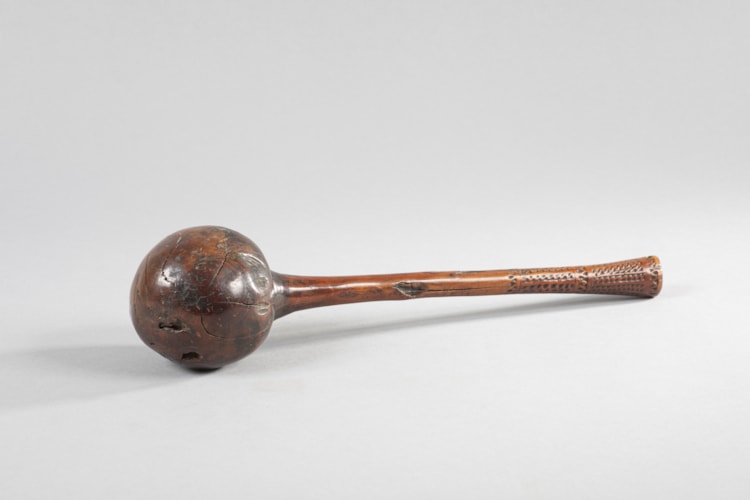
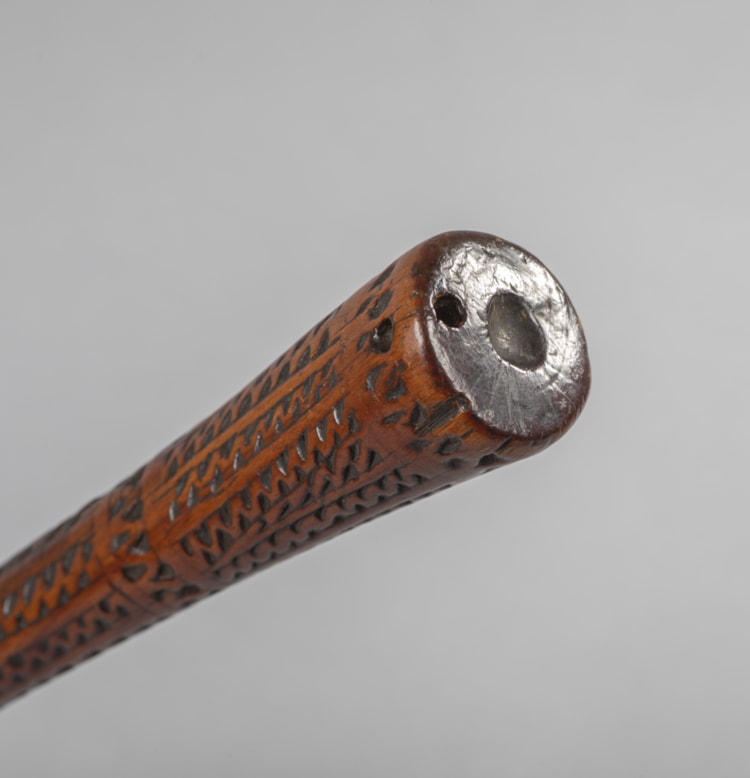
A fine, functional, short throwing-club with a rounded head and engraved grip or I ULA DRISA. The ula are heavy-headed short clubs used both as a hand-club and as a thrown weapon. A properly thrown ula can hit its target more than 15 meters away. The ula are specific to Fiji in Western Polynesia, although Tongan examples are known.
This precise example has a very specific history as it was used in the so-called "Burns family massacre" in 1873 and collected from the site in the aftermather of the terrible event.
Fiji, Polynesia
Ironwood (casuarina equisetifolia) with a patina of age and usage.
39,5 x 10 cm
XIXth century or earlier
Provenance
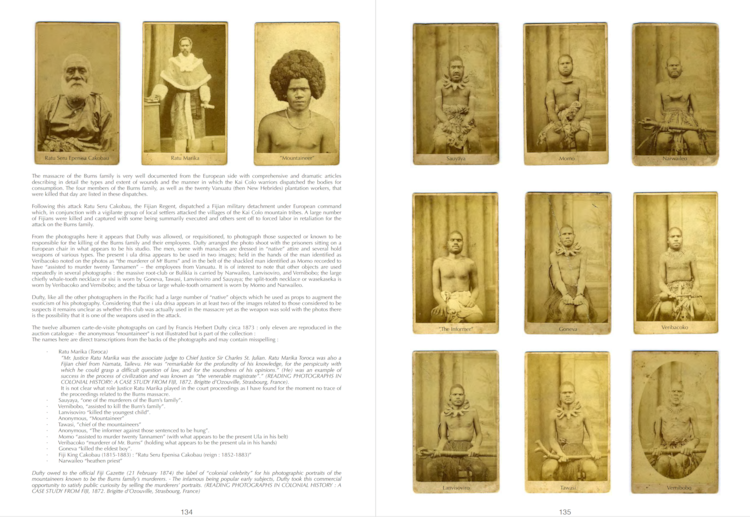
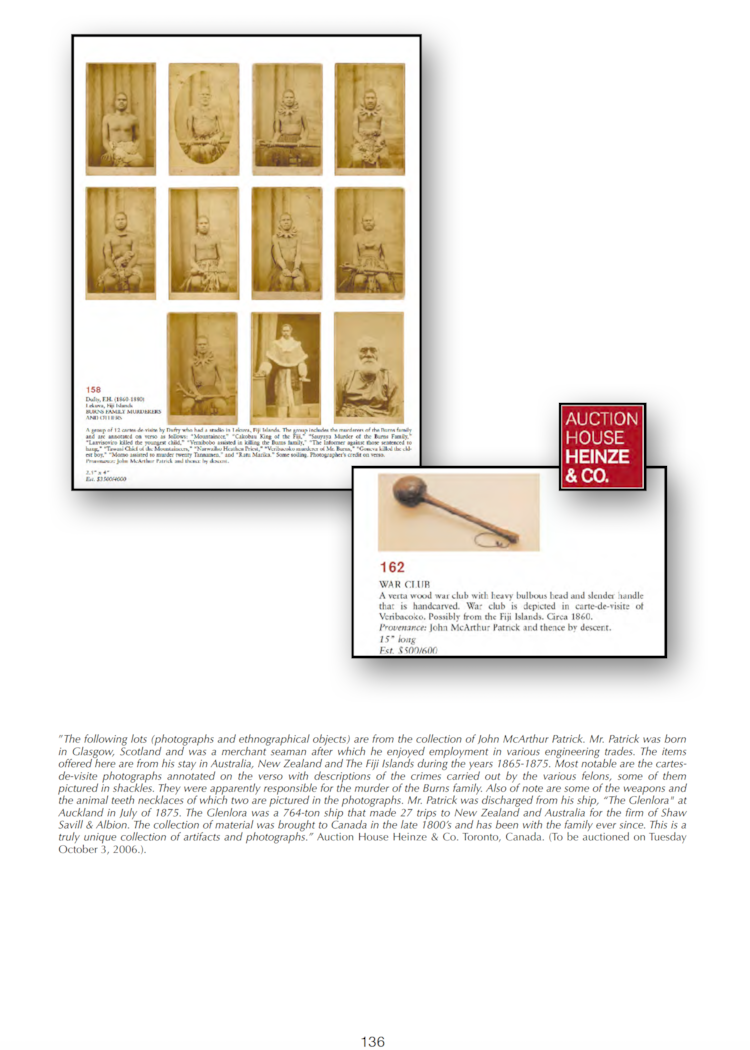
Provenance : This war-club was acquired at auction in 2006 from The John McArthur Patrick Collection in Canada along with a group of twelve albumen carte-de-visite photographs by Francis Herbert Dufty (active in Fiji 1871-1892) all inscribed on the back with mentions pertaining to the massacre of the Burns family in Fiji in 1873.
The Burns family massacre took place in 1873 following on the heels of a previous terrible misunderstanding in which two European settlers were killed by men of the Kai Colo Mountain tribes, along the Ba River on the island of Viti Levu. These horrific events stemmed from disputes about land ownership and the aggressive advance of European settlers creating homesteads far out from the established townships. This club is photographed twice by Francis Herbert Dufty II (c. 1846–1910) in the hands of the Burns massacre suspects.
Literature: CASSE-TÊTE II : ARMES ET ARMEMENTS DE L'OCÉANIE. Exhibition catalogue, Gal. Meyer, Paris, 2022, pp. 132-135