
Fiji Kali Headrest Ex Baron Rollin

Fiji Kali Headrest Ex Baron Rollin
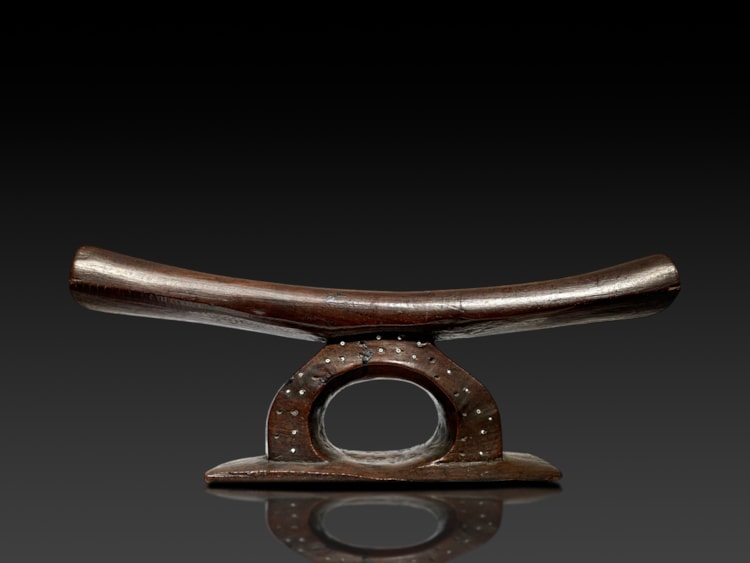
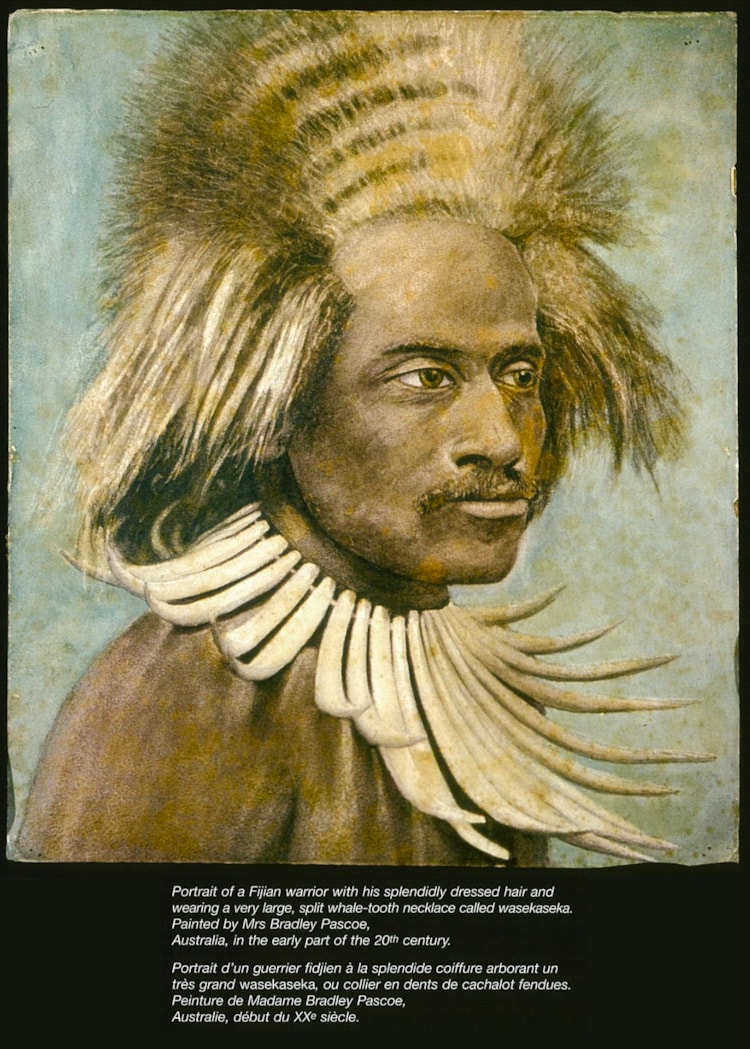
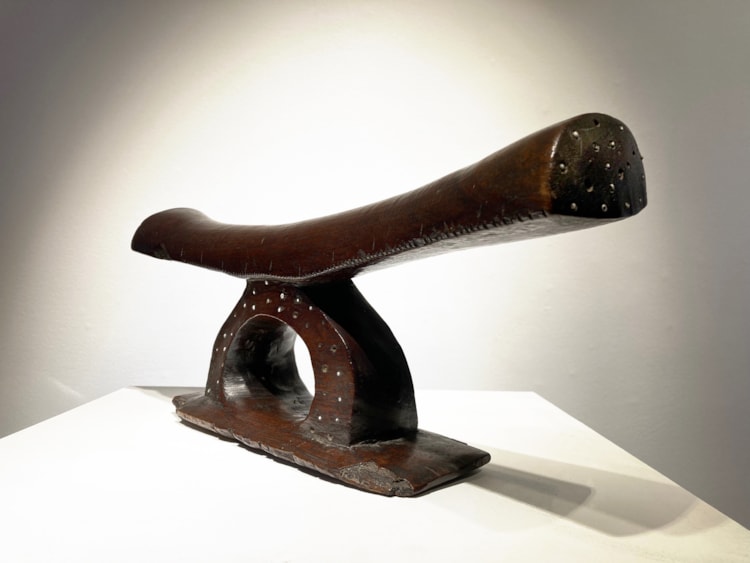
A large and powerfully carved kali headrest. The thick circular center section is a well-known form. It is extremely elegant and structurally sound. Carved with stone tools from a bloc of iron wood which is used for making the great war-clubs, this headrest was surely the property of an important man. The embellishment with inlayed white glass trade-beads shows not only wealth but can be related to the fine white bead encrusted necklaces worn by high-ranking warriors. The beautifully flared neck-bar is completely notched along one side and partially on the other. The completely notched side is unusual in that the 101 small cuts are divided into nine equal sections and one with eleven marks. While notching on war-clubs can be considered to be a form of a victims tally the notching on headrests is not yet defined. It may possibly be a record of the number of people that the owner has eaten as cannibalism was a norm in Fiji whereas elsewhere it is purely ritual. There are several recorded instances of Fijian men keeping tallies of how many bodies they have consumed over their own lifetime and where better to keep note than on your own prestigious headrest. One long edge of the base is deeply notched to the point that it appears as if chopped and the other edge is partially shaved as if to remove some notches.
Fiji, Polynesia.
Wood (casuarina equisetifolia) with trade beads.
44.5 x 10.3 x 17.7x 14.5cm.
18-19th century.
Provenance
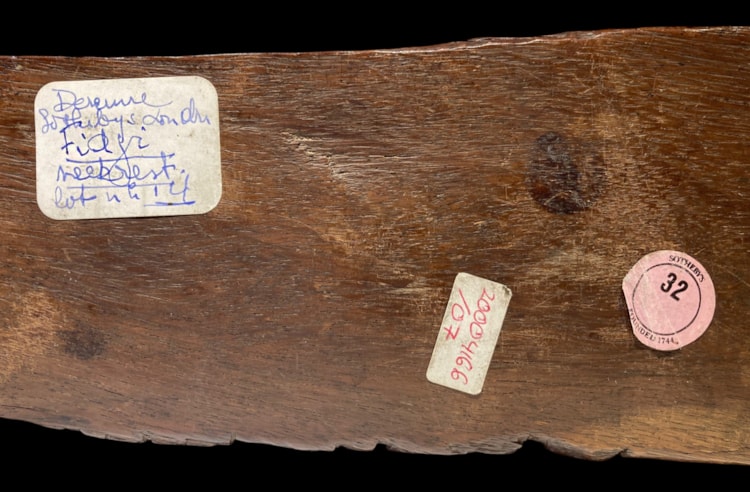
Ex collection Baron Frederic "Freddy" Rolin (1919-2002).
Christie's , Amsterdam, TRIBAL ART FROM THE ESTATE OF THE LATE BARON FREDDY ROLIN, 02/07/2002, lot 122
Literature: Pub. : Oceanic Headrests - Sleep with the Ancestors, Galerie Meyer, Paris, 2004, Fig. 48, p. 70.