
Abelam Bone Tube ex Anthony Forge
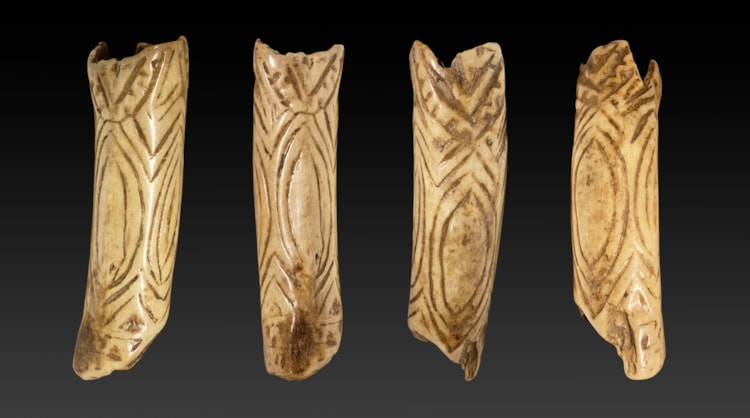
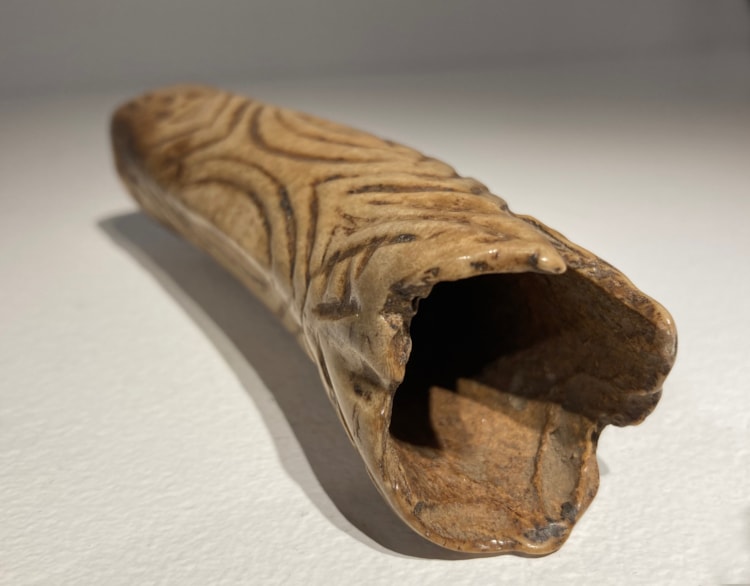
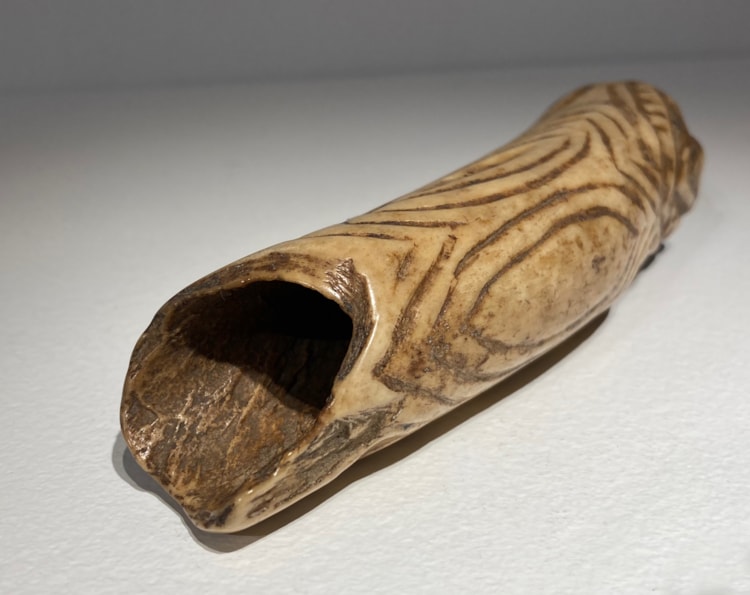
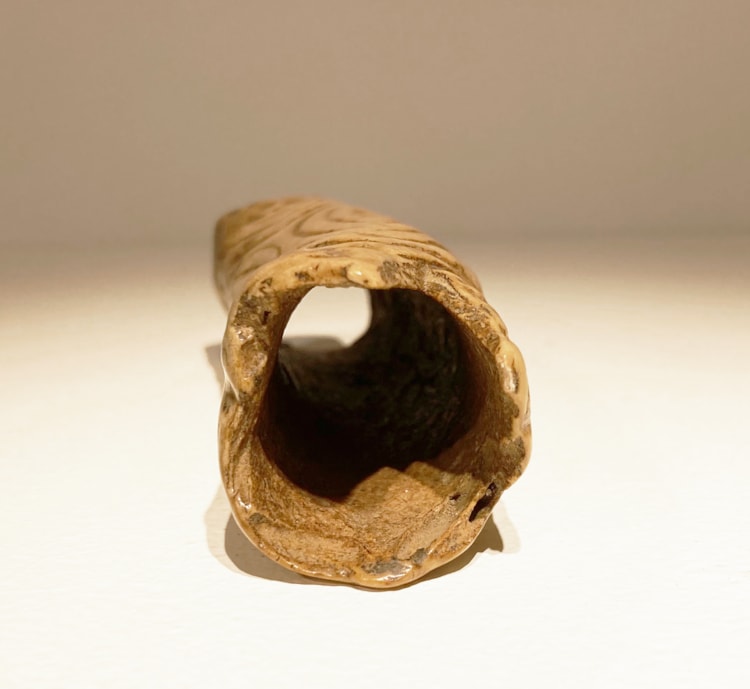

Abelam Bone Tube ex Anthony Forge
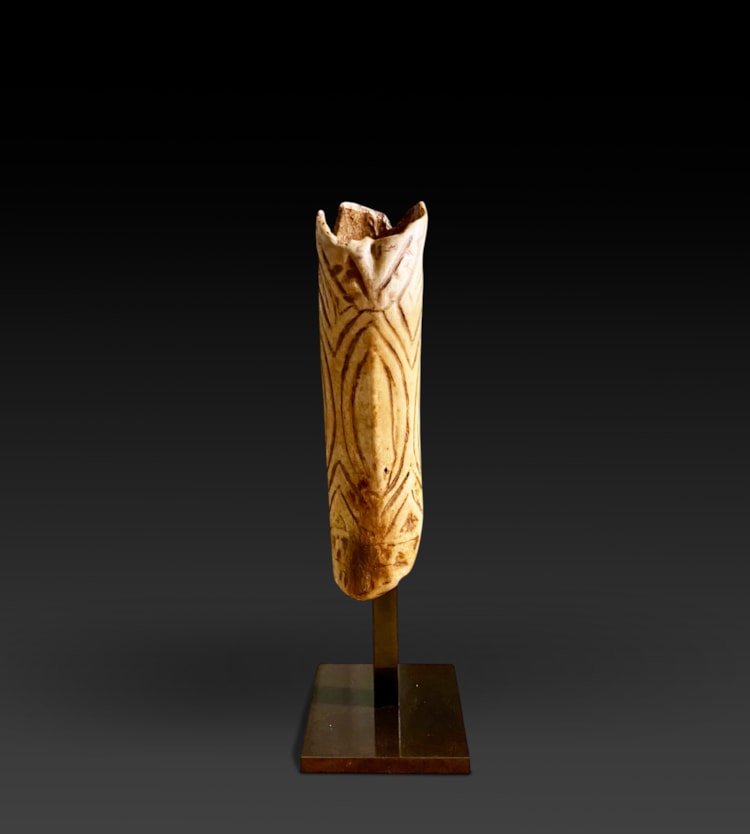
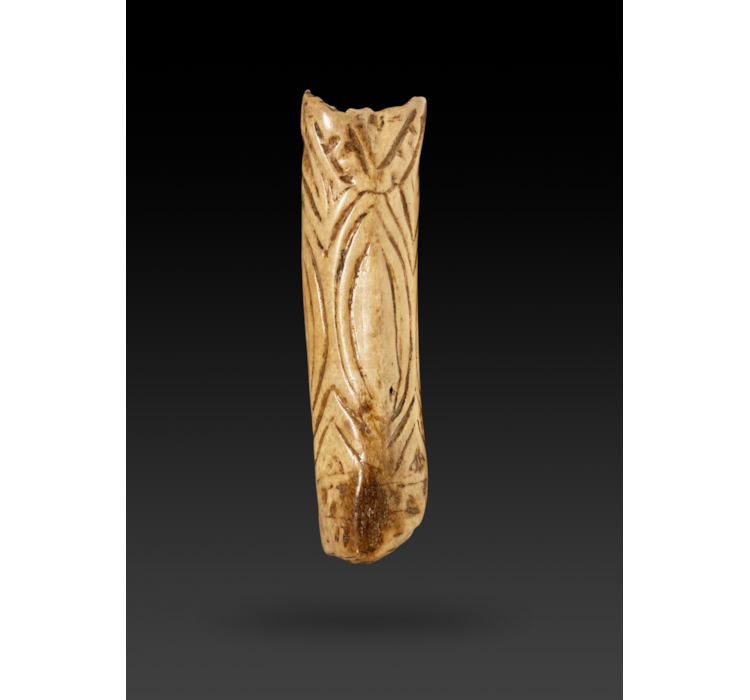
A very fine and archaic bone magical tube carved overall with stylized representations of the ancestral spirits or Nggwalndu. Long thought to worn in the hair these remarkable and esoteric objects are now known to be used in making magic – the type of magic however is still yet to be disclosed. Michal Hamson reports in his Abelam catalogue of 2015 (p. 241) that the tubes and their function were « each time … explained in terms of magic and secrecy with the suggestion of malicious intent »… by his informants in the field. In some cases old traces of compounded lime are found on the well worn, porus surface in the inside of the tube, however this presence of lime is still unexplained as well.
Bukie or Northern Abelam Area, PNG, Melanesia.
Human bone with a fine patina of long usage and great age.
12,8 cm.
19th century or earlier.
Collected in the field by Anthony Forge (c. 1960’s).
Provenance
Provenance :
Ex Anthony Forge (1929-1991)
The international trade
Ex Constantine Joicey collection, Athens
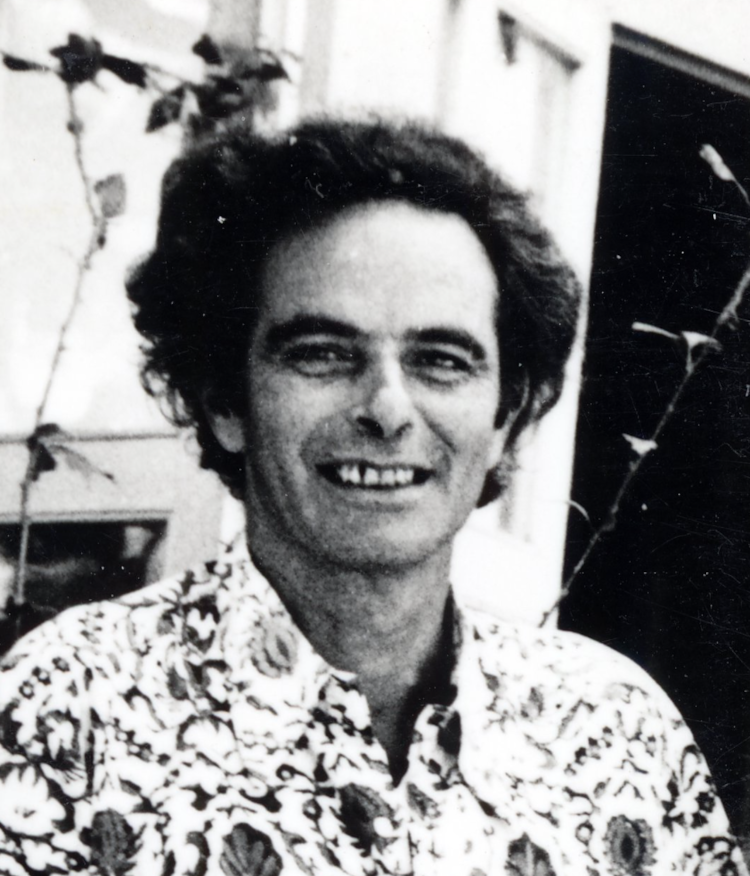
Anthony Forge (1929-1991), a Professor of Anthropology in the Faculties at ANU Canberra in the 1970s carried out extensive research in the Abelam and Sepik River areas in the 1960’s-70s. Born in London he studied archaeology and anthropology under prominent anthropologist Edmund Leach at Cambridge University, graduating in 1953. As a student, Forge had examined the extensive collection from the Sepik region of Papua New Guinea, housed at the Haddon Museum at Cambridge, now the Museum of Archaeology and Anthropology. The study of this collection, assembled by anthropologist Gregory Bateson, probably influenced Forge’s future interests. He worked for three years in the printing business before undertaking further studies at the London School of Economics where he developed a long-lasting friendship with Sir Raymond Firth, the ‘father’ of British economic anthropology. Between 1958 and 1963 Forge undertook research on Abelam people of the Sepik region of Papua New Guinea, focusing on social organisation, aesthetics and ritual. He was Assistant Lecturer in Social Anthropology at the London School of Economics, a Visiting Professor at Yale University, USA, appointed Senior Lecturer at the London School of Economics and finally was appointed Professor of Anthropology at the Australian National University in Canberra, where he remained until his death in 1991. By the early 1970s Forge was recognised as an authority in the field of visual anthropology. His extensive fieldwork in Papua New Guinea resulted in a number of essays about Sepik art as well as extensive documentations and collections of artefacts from the Abelam culture. Collections of New Guinea Art made by Anthony Forge are housed now predominantly at the Museum of Ethnography in Basel, Switzerland, and the Museum of Archaeology and Anthropology at the University of Cambridge, UK. After his death a number of objects from his private collection were sold both through auction and privately with a large number of pieces going to John Friede and his JOLIKA collection.
Literature:
See the diagram showing the extreme stylization of the human body in the « hoker » position resulting in the elimination of the head, hands and feet creating a repeating design patern of ovals and chevron shapes. There is also a sexual conotation with the oval « body » representing a highly stylized vulva.