
Moriarty Wandam or Brag Mask
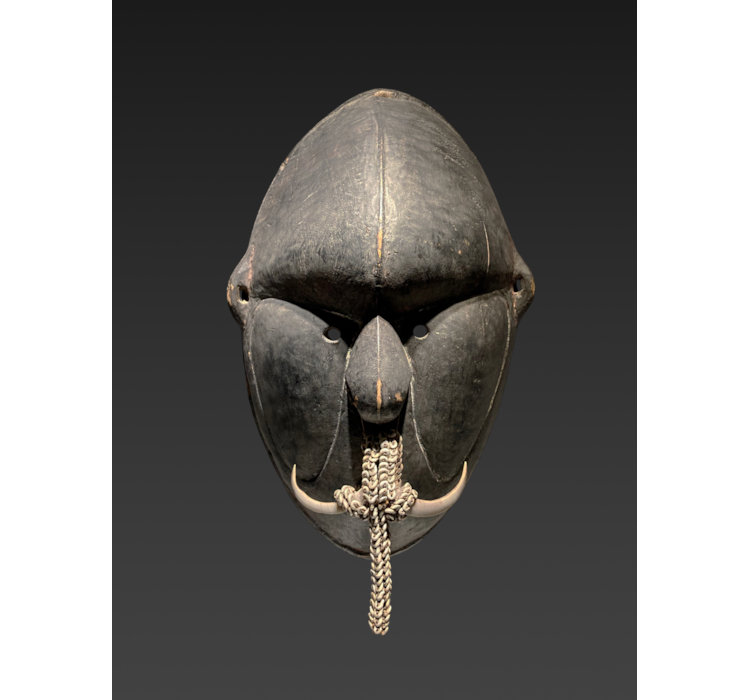
Moriarty Wandam or Brag Mask
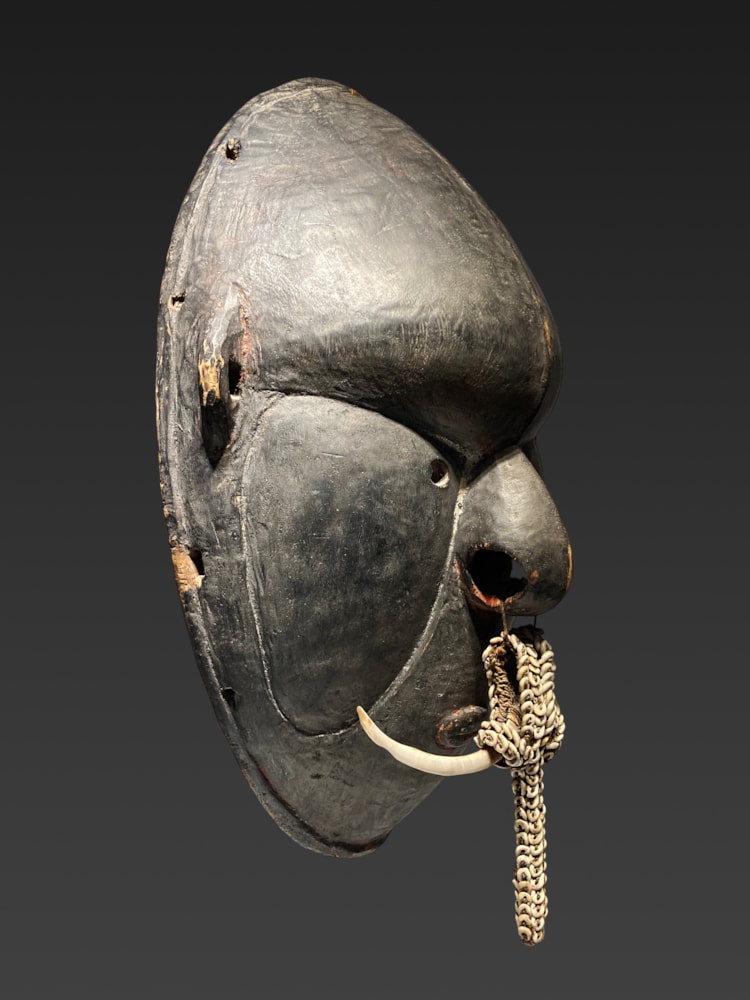
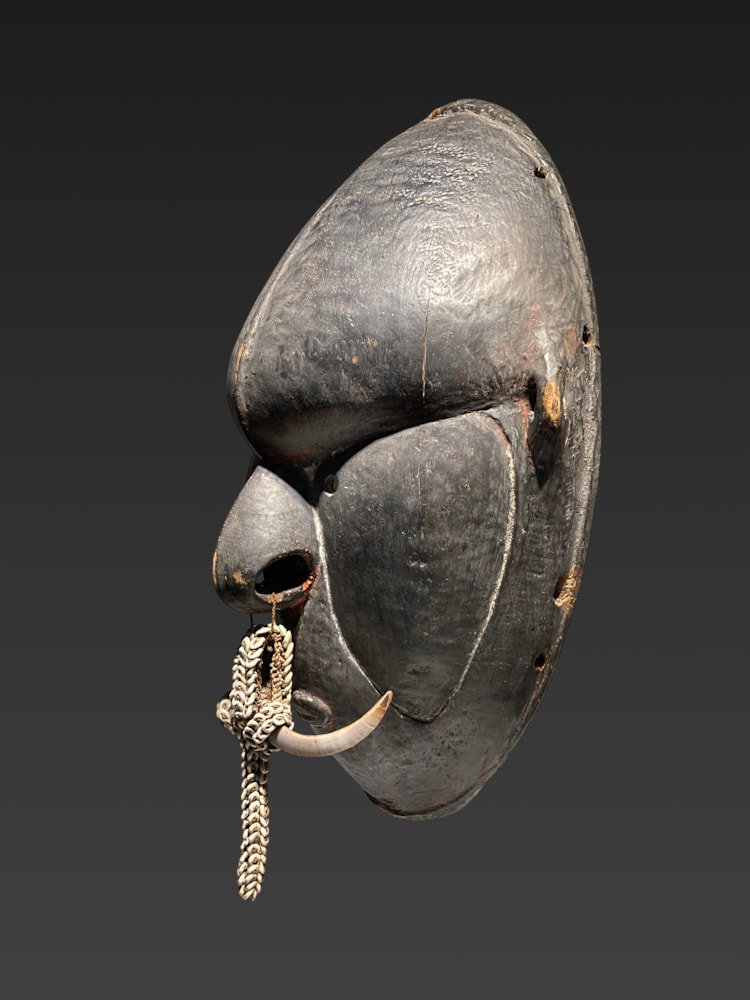
Wandam mask (Carlier*) or Brag of oval shape representing a powerfully carved man's face. The imposing and large pierced nose is curled over the upper lip. The bulging forehead echoes the full and rounded cheeks under the deeply set small round pierced eyes,. The pouting mouth is part of a delineation of the lower face in slight relief. An important nasal ornament of an initiated man is attached to the nose hanging from the pierced septum. This type of mask, the male representation of ancestor spirits, was used during initiation rites and for hunting and war rituals.
Probably Awar Village, Hansa Bay Ramu River, Lower Sepik Region, PNG, Melanesia.
Hardwood with several layers of black pigments on top of other layers of red and with traces of a white pigment. The pendant made of fibers and shells (nassa) and pig tusks.
The whole with a fine patina of age and use.
49 cm.
Early 20th century.
Provenance
Provenance :
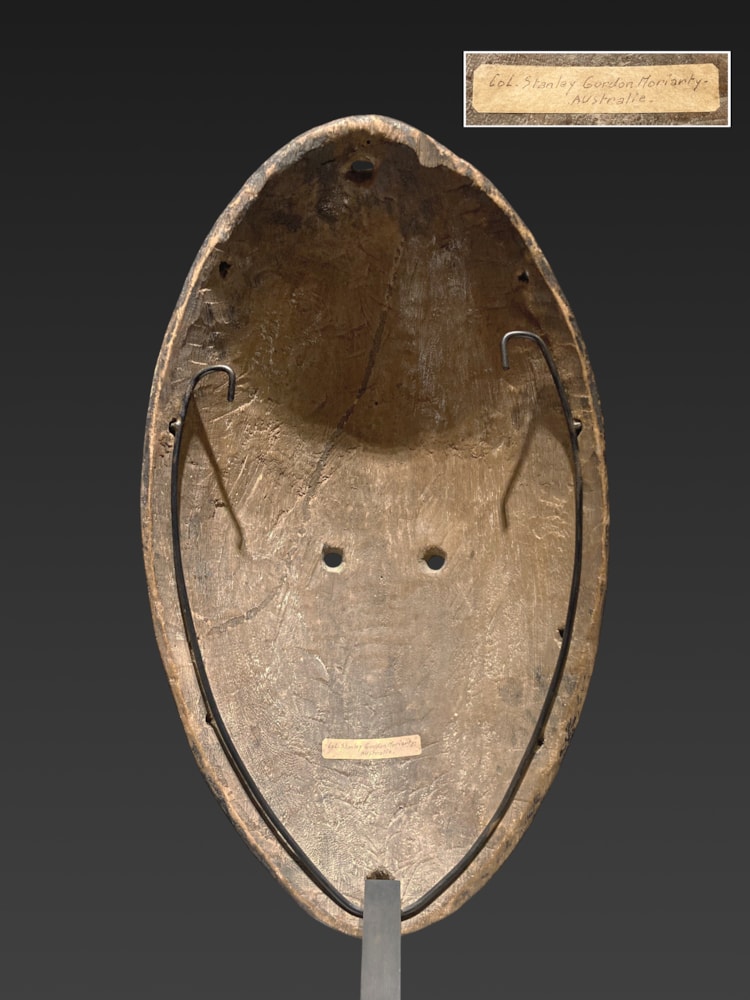
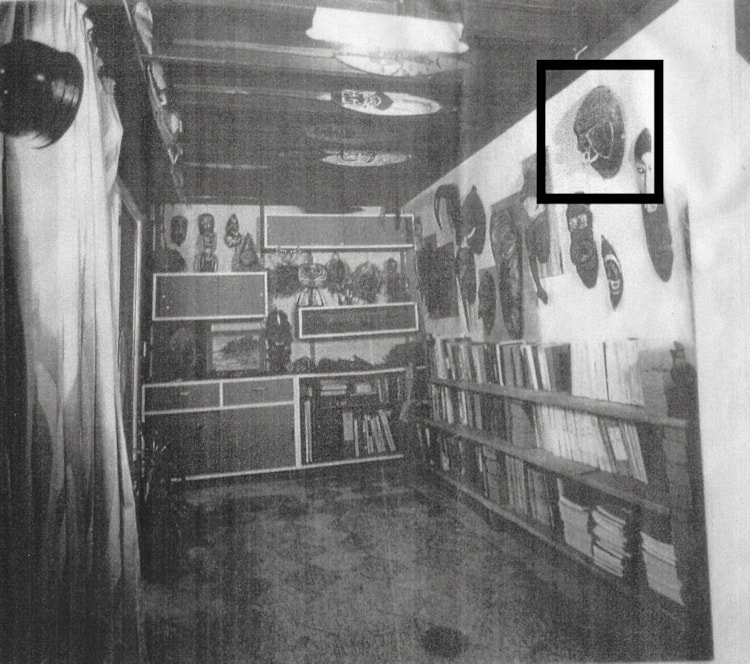
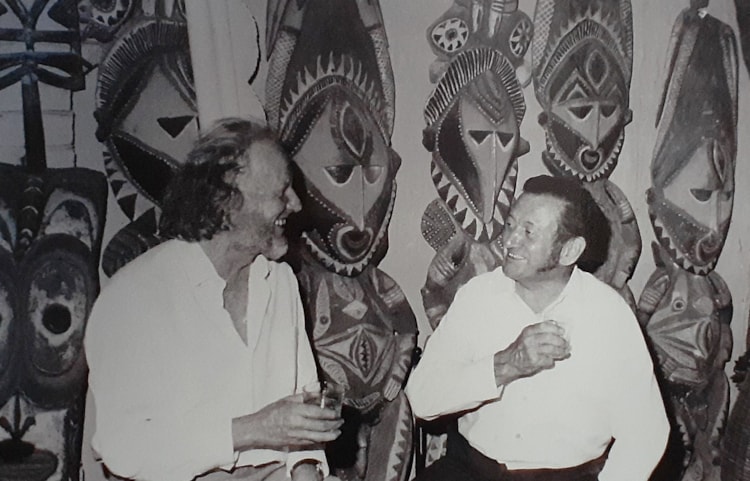
Former Stanley Gordon Moriarty Collection (1906-1978), Australia. A photo taken in the Moriarty Library room shows the mask on the wall**.
Ex Chris Boylan, Sydney.
Ex. Coll. Daniel Vigne, Paris.
Galerie Meyer, Paris.
Private Parisian collection.
Literature:
See an almost identical mask collected in the village of Awar and sold by the Galerie Voyageurs et Curieux, Paris, then Collection P. L., Netherlands, then Galerie Meyer, Paris; now in a European collection. *Jean-Edouard Carlier of the Galerie Voyageurs et Curieux calls this type of mask Wandam while general literature places it in the category of Brag.
Cf. for a very similar mask from the village of Singrin, see the collection of the Royal Museum for Central Africa, Tervuren, inv. no. 79.1.1299 and reproduced in Nicolas, A., Art Papou: Austronesians and Papuans of New Guinea, Marseille, 2000, p. 253, fig. 248. For another similar mask, see the collection of the Ethnologisches Museum in Berlin, inv. no. VI 19316 and reproduced in Peltier, P. et al., Sepik: Arts de Papua New Guinea, Paris, 2015, p. 251, fig. 130.
See the photo of Tony Tuckson (left) and Stan Moriarty (right)
See the photo of the Moriarty library with the mask on the wall**