
A Fiji Basket-Hook Ex Capt. Thomson
A Fiji Basket-Hook Ex Capt. Thomson
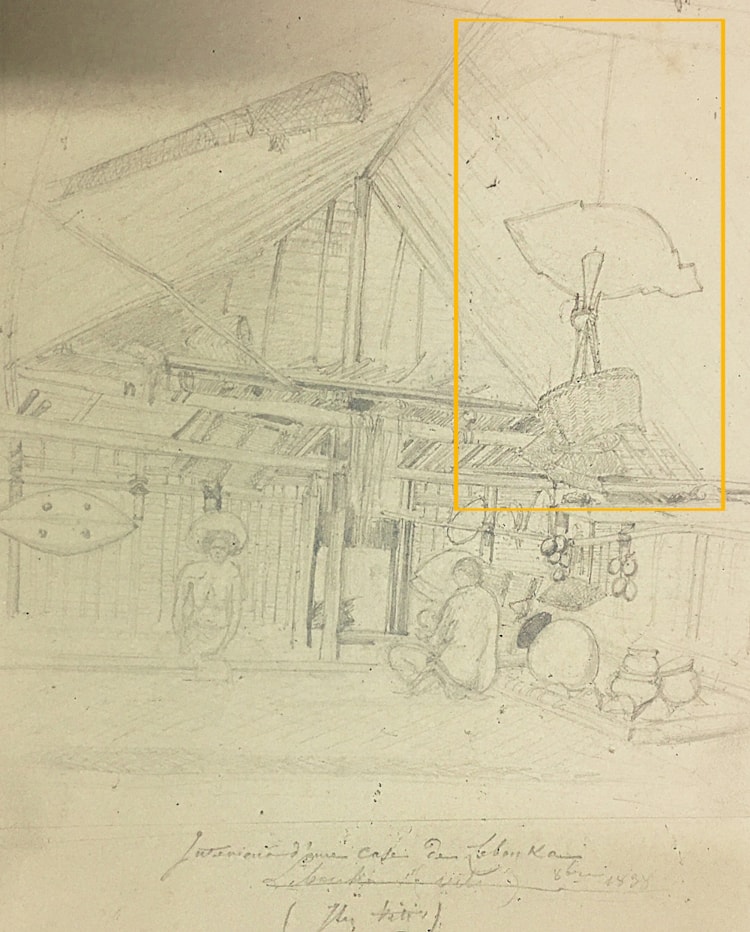
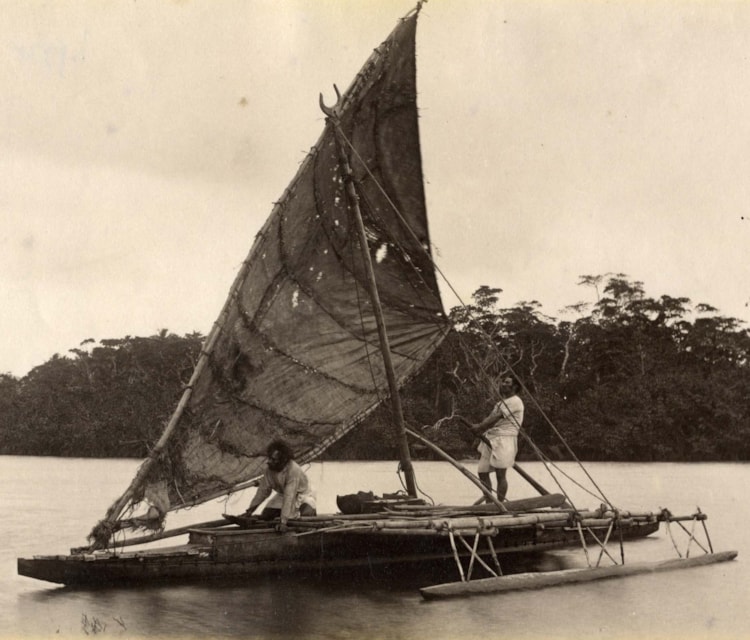
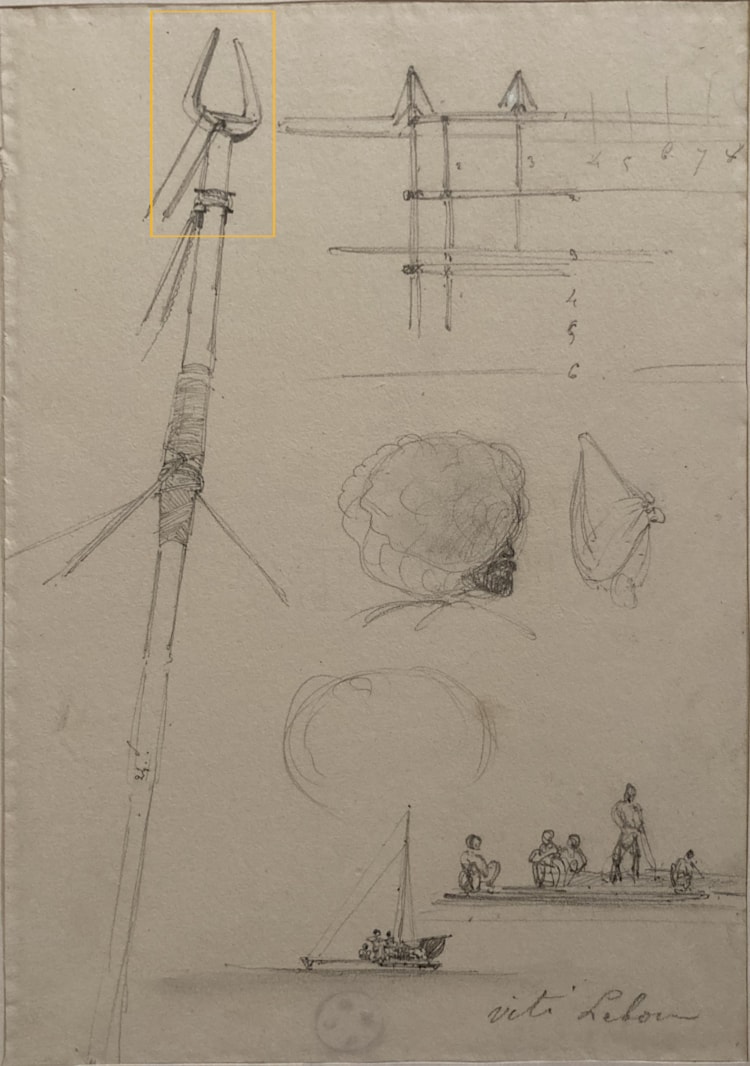
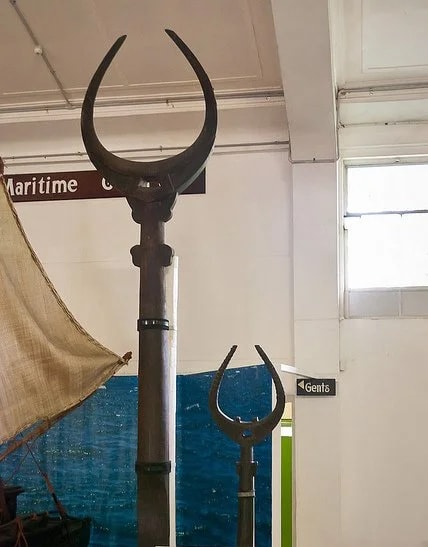
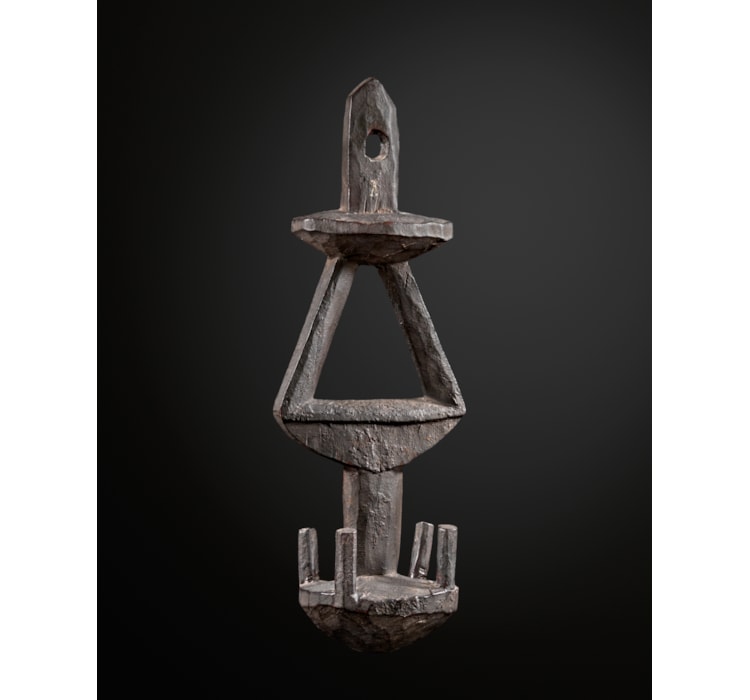
A basket-hook or ililili. The central section is a rare stylized representation of the celebrated itagaga, the gigantic, horned mast-head, or ndomondomo, of the tongiaka, the great ocean-going, double-hulled canoe. Hooks of this type were used by the Fijians to suspend either food baskets or cérémonial items in prder to preserve them from vermin. A hook of this caliber and stylistic representation can only have belonged to a man of great importance.
Fiji Islands, Polynesia.
Iron-wood,vesi (Intsia bijuga), with a thick crusty patina.
35.5 x 12.1 x 7.2 cm.
18th/19th century.
Provenance
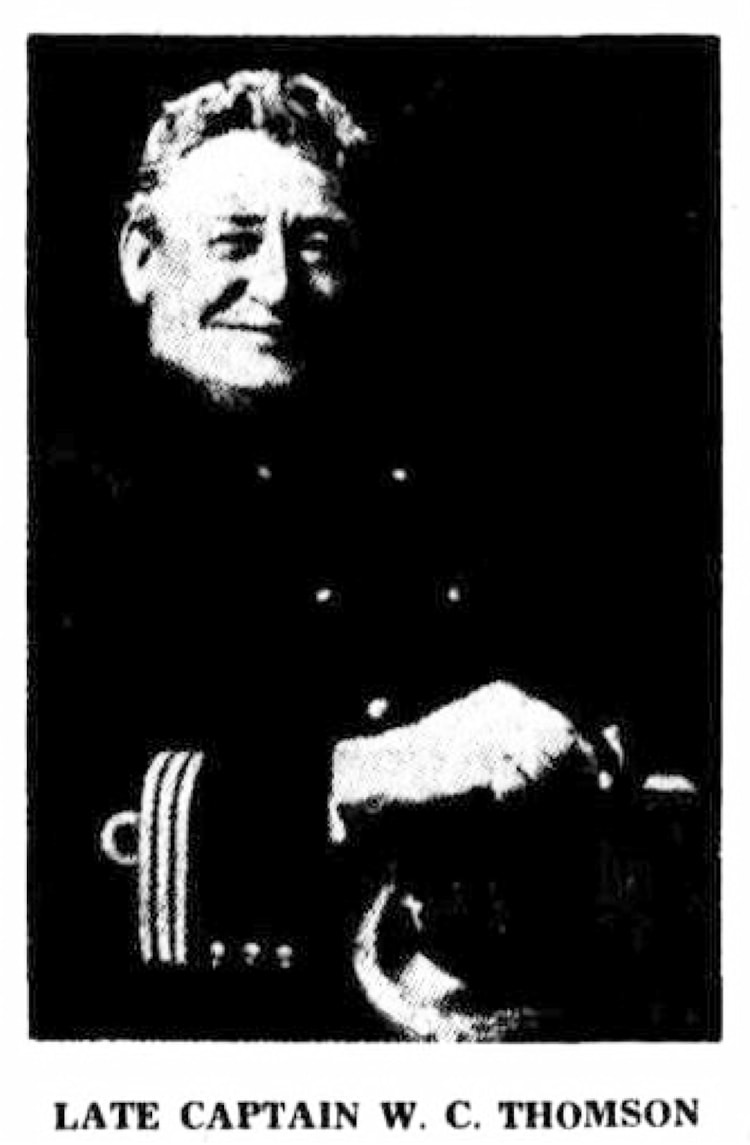
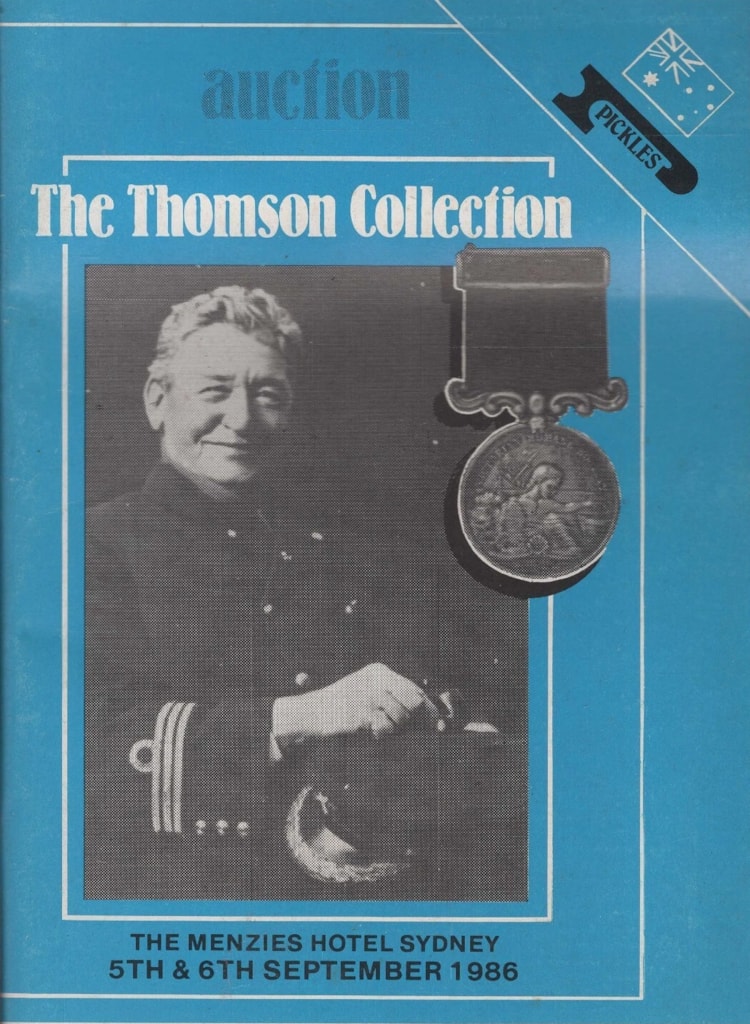
Formerly in the collection of Captain W. Campbell Thomson (1851-1934). Bears the Captain Thomson inventory Nº 1, collected in Fiji before the end of the 19th century. Most probably an item given to Thomson by the great Chief (and subsequently King) Cakobau as most of the fijian material in the collection is described by Thomson as gifts from Cakobau with whom he was reported to be very friendly.
Sold at the Thomson Collection Sale at auction by Pickles & Co., Sydney Australia, 5th & 6th September 1986, lot number 87, illustrated page 31 of the sale catalogue.
Originally purchased from Alain Schoffel. Ex Coll.: Bruno Gay, Paris.
William Campbell Thomson (1851-1934) was born in Scotland in 1851 and attended school in the town of Peterhead. From a young age he had a strong desire to go to sea and was eventually apprenticed to the White Star Line. The White Star Line operated a fleet of clipper ships between Britain and Australia and Thomson spent much of his cadet period sailing in Australian waters. On completing his apprenticeship in the early 1870s, he passed his mate’s examination and obtained a position as Second Officer on the City of Adelaide working on the Australian coast. Later he took a position as Chief Officer on board the John Wesley, a missionary ship working in the South Sea Islands. The five years spent on the John Wesley saw him develop a lifelong passion for Polynesian and Melanesian anthropology. During his life he amassed an important collection of material related to these interests. Thomson also met his first wife, Elizabeth Daniel, a Methodist missionary, on board the John Wesley. Following the John Wesley, he joined the Australian Steamship Navigation Company working along the east coast of Australia. Initially settling with his young family in Sydney, he soon moved to Brisbane living first at Kangaroo Point, then at Windsor. In 1896, Alexander Agassiz of the Museum of Comparative Zoology, Cambridge, Mass. USA, chartered an A.S.N. ship, the S.S. Croydon, captained by W. C. Thomson, for an expedition to the Great Barrier Reef. In 1897, Agassiz returned and chartered another ship from A.S.N., again with Thomson as captain, this time for an expedition to study the Fiji Islands and surrounding reefs. In 1903 Thomson lost his first wife to an ongoing illness, and remarried a matron, Jean Bourne, soon after. They moved from Windsor to Ascot. Thomson lost his second wife to pneumonia around 1910, eventually remarrying for a third time. He retired from the sea after World War One. Captain Thomson was a Fellow of the Royal Australian Historical & Geographical Societies for whom he wrote and presented several papers.
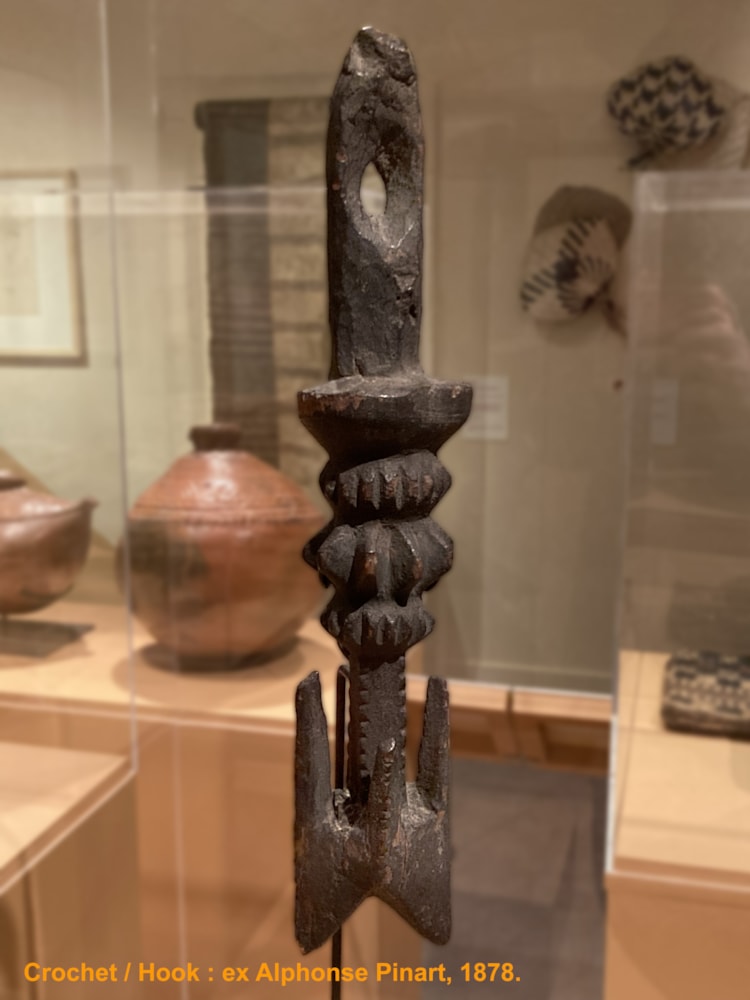
Literature: See the early photo of a Fijian canoe under sail to view the horned mast-head, as well as two drawings by Ernest Goupil in 1838 showing a hook in use and a study of a mast-head. See the suspension hook from the collection of Alphonse Pinart from 1878 now in the Musée du quai Branly-Jacques Chirac.